
Loading...
Please wait while we prepare your content.
Please wait while we prepare your content.
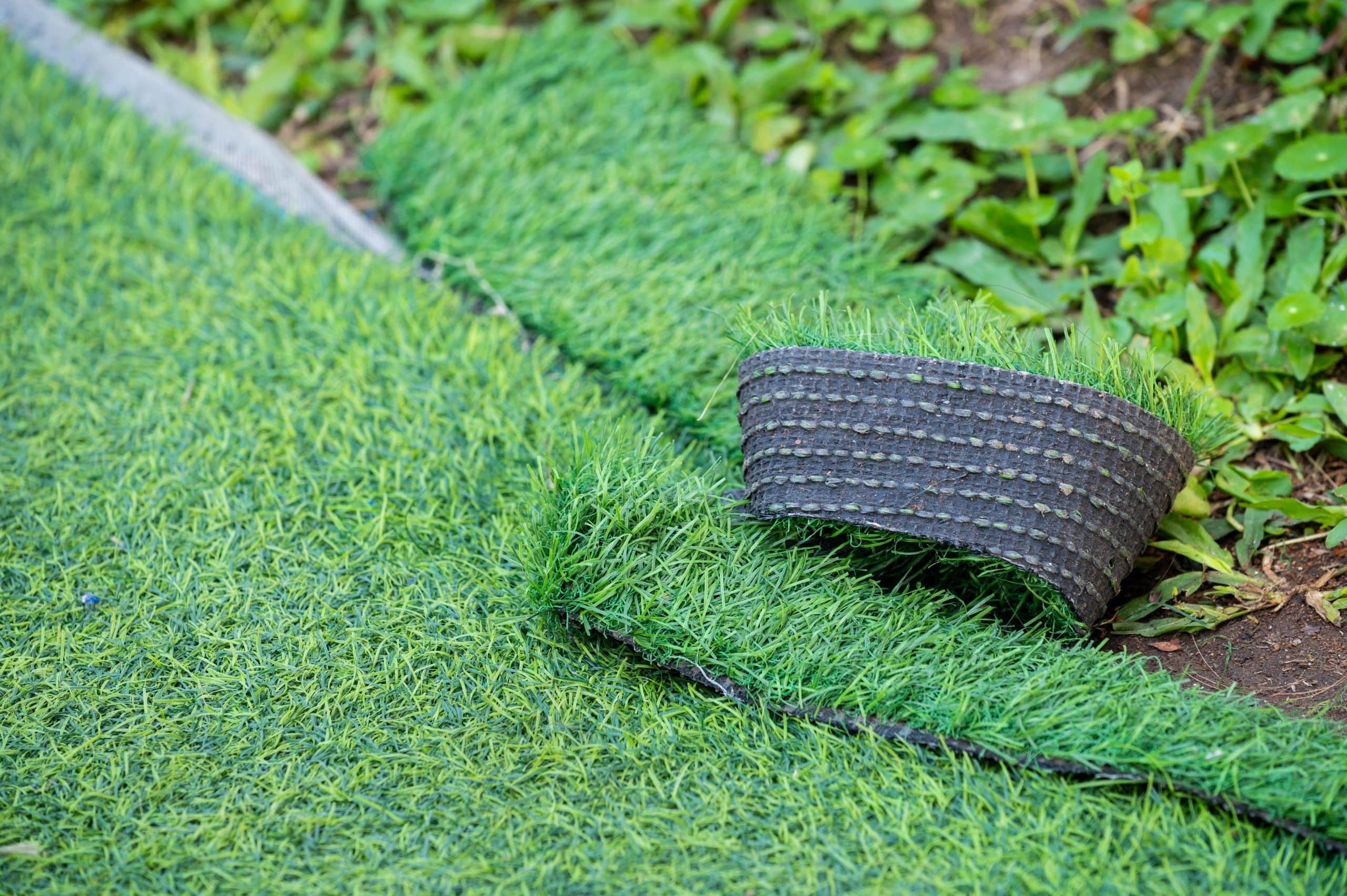
Professional artificial turf maintenance for Denton County properties. Keep your installation performing correctly through North Texas heat cycles, clay-driven movement, and the kind of heavy seasonal use that Denton yards actually see.
Artificial turf is marketed on its low-maintenance characteristics, and the marketing is mostly accurate. You don't mow it. You don't water it. You don't fertilize it or treat it for pests. Compared to a natural grass lawn in Denton County — where the clay soil, extreme summer heat, and periodic drought conditions make every growing season a managed challenge — a well-installed artificial turf system is genuinely far less demanding. But low maintenance is not zero maintenance, and that distinction matters for getting the full lifespan and performance out of your installation.
Denton's climate creates specific maintenance conditions that accelerate certain degradation pathways if they're not addressed on a regular schedule. Summer heat combined with UV exposure causes turf fibers to flatten and lose their upright position if infill isn't maintained at proper depth and distribution. Denton County's spring storm season drops organic debris — leaves, seed pods from the pecan and oak trees common in older neighborhoods near the Square and North Lakes Park — that accumulates in the infill layer and, left long enough, begins composting in place. Pet use areas in the Texas heat generate bacterial activity that needs periodic professional treatment to stay odor-controlled. Seams and edges go through seasonal stress as the clay sub-base moves with moisture cycles.
Professional maintenance catches and corrects these issues before they compound. The difference between artificial turf that looks great at year ten and turf that looks worn and flattened at year five is largely maintenance history.
Fiber upright position is the most visible characteristic that distinguishes well-maintained synthetic turf from neglected turf. Over time, foot traffic, pet use, and heavy furniture compact both the turf fibers and the infill beneath them. Fibers lose their upright position, creating a matted, worn appearance particularly in high-traffic zones — door approaches, pet run paths, family backyard play areas. Professional brushing with power grooming equipment lifts the fibers back to upright position and redistributes infill to proper depth beneath them. The result is a visible restoration of the original lush appearance that surface-only brushing by a homeowner can't fully achieve in compacted areas.
Infill management is the mechanical heart of the maintenance process. Infill keeps fibers standing upright, provides the cushioning that makes the surface comfortable to use, contributes to drainage performance, and — in pet-specific applications — carries the antimicrobial function that controls odor. Infill migrates toward the edges of the turf area over time, depletes in heavy-use zones, and compacts in areas with consistent weight or foot traffic. Professional maintenance redistributes existing infill across the surface and supplements with fresh infill where depth is below specification. This is not something homeowners can assess or address accurately with household equipment.
Deep cleaning removes accumulated organic debris, dust, pollen, and surface contaminants that a standard rinse or light brushing doesn't fully clear. In Denton, the spring oak and pecan pollen season is particularly heavy — this material accumulates in the infill and can affect both drainage performance and surface appearance. A professional deep clean using appropriate equipment and cleaning solutions restores the infill to a clean functional state without damaging turf fibers or disrupting infill distribution.
Pet-use turf areas in Denton require more frequent professional attention than non-pet areas, and the summer months are when the need is most acute. Bacterial activity in organic matter retained in the infill layer accelerates with heat. An antimicrobial infill helps significantly, but it's not a permanent passive solution — it needs to be replenished and supplemented with periodic enzymatic deep cleaning that breaks down the organic compounds at the source rather than just managing surface-level odor.
Our pet-specific maintenance includes deep enzymatic cleaning that penetrates the infill layer and addresses bacterial colonies at their source. We use pet-safe cleaning agents appropriate for the type of infill in your installation. For high-use pet areas — multi-dog households, professional breeding operations, dog daycare facilities using turf for outdoor areas — we can structure more frequent service schedules that maintain performance through the heaviest summer use periods.
Households in Argyle with acreage dog runs, families in the North Lakes Park area with enclosed backyards that see daily heavy dog traffic, and Robson Ranch residents with dedicated pet areas all benefit from turf maintenance schedules that account for their specific use intensity and the Denton County climate's amplifying effect on pet-related maintenance needs.
North Texas has a distinct seasonal rhythm that creates natural timing windows for professional artificial turf maintenance. Spring maintenance — late March through April — addresses what accumulated through the winter: debris from fall leaf season that didn't fully clear, any edge or seam stress from winter frost events, and pollen accumulation from the beginning of oak and cedar season. Spring is also an ideal time for a full infill assessment before the summer heat cycle begins.
Late summer or early fall maintenance — September through October — addresses the effects of the hardest use and UV exposure season. By late summer, high-traffic areas often show noticeable fiber flattening and infill displacement. A professional service before the season transitions restores the surface going into fall and winter when the turf sees different use patterns. This timing also allows any seam or edge issues that developed under summer heat stress to be identified and addressed before they worsen.
For most residential properties in Denton County, twice-annual professional maintenance aligns well with the seasonal cycle. Pet-use areas and high-traffic commercial installations benefit from quarterly service or a custom schedule based on their specific use intensity.
Every professional maintenance visit includes a seam and edge inspection. Seams are the mechanical vulnerability in any artificial turf installation — the point where adhesive tape, backing, and edge anchoring are all under periodic stress from foot traffic, clay sub-base movement, and temperature cycling. Most seam issues are detectable early if you're looking for them: slight gap opening, minor edge lifting in a specific run, a section of edge anchoring that's beginning to release from its substrate. Caught early, these are minor fixes. Left until they're visually obvious or create a trip hazard, they're more significant repairs.
Denton County clay movement makes seam and edge inspection particularly important here compared to more stable soil regions. The seasonal expansion and contraction of the clay sub-base puts periodic lateral stress on perimeter anchoring and seaming. We look specifically for these failure indicators during every maintenance visit because they're a predictable consequence of the soil environment rather than an installation quality issue.
Commercial artificial turf in Denton — HOA common areas, apartment complex lawns, retail and restaurant surrounds, office building grounds — typically needs more frequent professional maintenance than residential installations because foot traffic is continuous and the expectation for appearance is higher. We offer structured commercial maintenance programs for property managers and business owners across the Denton County area, including quarterly service, monthly service for high-traffic applications, and custom scheduling for facilities with specific operational requirements.
Contact Artificial Turf of Denton to schedule professional maintenance or to discuss a maintenance program appropriate for your installation. We service residential and commercial properties throughout Denton County. If you're not sure what service frequency is right for your property, we can assess your current installation and make a recommendation based on its age, use pattern, and current condition.
Twice per year is the baseline for most residential installations in Denton County — spring to address winter accumulation and pre-summer condition, late summer or fall to restore after the hardest use season. Pet-use areas and high-traffic commercial installations benefit from quarterly service or more.
Extended summer heat accelerates bacterial activity in retained organic matter, particularly in pet-use areas. Heavy spring pollen season loads the infill with debris. Clay sub-base movement creates seasonal stress on seams and edges. All of these are Denton-specific factors that make professional maintenance more meaningful here than in more temperate climates.
Yes — and we explain how during every visit. Light brushing with a stiff broom in high-traffic areas, debris removal after wind events, and rinsing pet-use areas are homeowner-appropriate tasks. Professional service adds power grooming, infill assessment, deep cleaning, and structural inspection that standard homeowner equipment can't fully replicate.
Pet-specific service includes everything in a standard visit plus enzymatic deep cleaning that penetrates the infill layer to address bacterial colonies at the source rather than just surface odor management. We use pet-safe agents appropriate to the infill type in your installation.
Yes. We serve HOAs, apartment complexes, retail and restaurant properties, office buildings, and other commercial turf installations across Denton County. We structure programs at quarterly, monthly, or custom frequencies based on use intensity and appearance requirements.
Get started with artificial turf maintenance. Contact our Denton team for a free consultation.