
Loading...
Please wait while we prepare your content.
Please wait while we prepare your content.
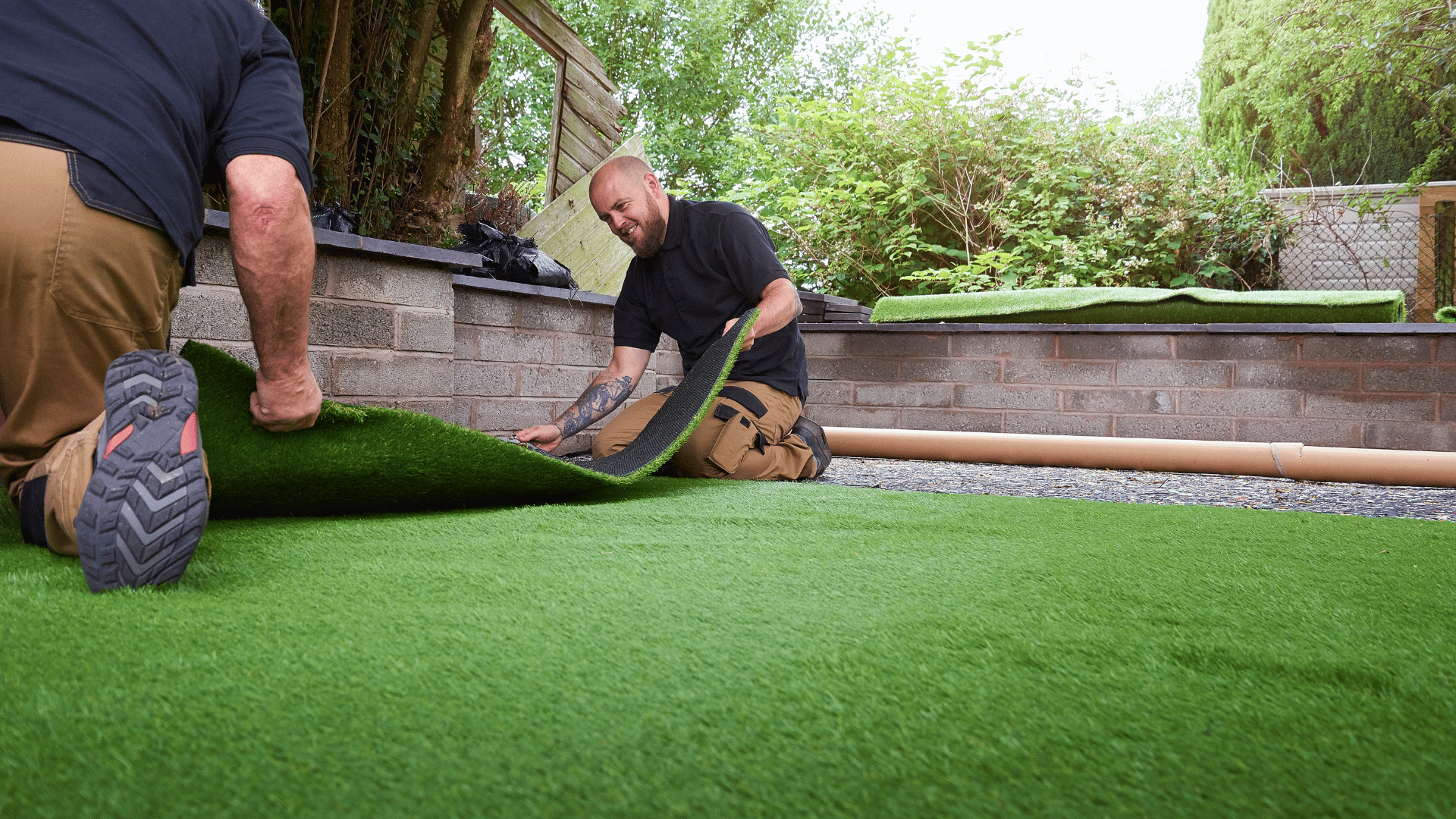
Professional artificial turf repair across Denton County. Seam failures, edge lifting, base settling, and damage repairs handled by installers who understand Denton County clay and North Texas climate stress.
Artificial turf is a long-life product when properly installed and maintained, but it's not immune to damage or mechanical failure over time. Seams open. Edges lift. Base materials settle under Denton County's expansive clay. Physical damage from sharp objects, heavy furniture movement, or digging pets creates tears and holes. Infill depletes in heavy-use zones, leaving flat, under-supported areas. Drainage problems develop when base materials shift or compact. These are real repair scenarios that affect properties across Denton County, and addressing them promptly prevents small issues from becoming significantly more expensive problems.
What distinguishes a quality repair in the Denton context is understanding why the failure occurred — not just what failed visibly. A seam that's opened on a property with expansive clay sub-base isn't the same repair scenario as a seam that opened due to installation workmanship. An edge that's lifting on the south side of a property near a concrete border has different root causes than one lifting at a landscaped perimeter. Effective repair addresses both the visible symptom and the underlying condition that produced it, or the repair is temporary at best.
Seam failure is the most common repair request for artificial turf in Denton County, and Denton County clay is a significant contributing factor. Expansive clay sub-bases move laterally with seasonal moisture changes — swelling in wet spring months and contracting during summer drought cycles. That movement creates periodic lateral stress on perimeter edges and, particularly in the first several years after installation, on interior seams. Seams bonded with adhesive tape are most vulnerable when both clay movement and age-related adhesive degradation are factors simultaneously.
Our seam repair process begins with assessing the seam condition and the sub-base movement status. If the clay has shifted significantly, simply rebonding the seam without addressing the sub-base creates a repair that will fail again. In cases where sub-base migration is the contributing factor, we address grading and drainage before re-seaming. For seam failures caused by age-related adhesive degradation without active sub-base movement, the repair is more straightforward — cleaning the backing surfaces, applying fresh commercial-grade seam tape and adhesive, and rebonding with appropriate weight during cure. The completed repair is visually clean and mechanically sound at the backing level, not just cosmetically joined at the surface.
Edge lifting happens when perimeter anchoring fails to hold the turf against the lateral tension created by temperature cycling, use, or sub-base movement. Lifted edges are a cosmetic issue but also a trip hazard, and they allow weed intrusion and pest access at the perimeter if left unaddressed. The repair approach depends on the anchoring method used in the original installation and the type of perimeter the edge meets.
For edges anchored with nails or staples along a bender board or wooden edging, re-anchoring is generally a direct process — pull back the edge, reset or replace the bender board if needed, re-anchor the turf at appropriate nail spacing and depth. For edges meeting concrete, brick, or pavers, the repair involves cleaning the edge adhesive contact surface and re-bonding with appropriate construction adhesive, sometimes supplemented with additional mechanical fastening. We assess what caused the original edge failure before choosing the repair method, because the same lift symptoms can come from different underlying causes.
In older Denton neighborhoods near the Square and the North Lakes area where landscaping has more mature trees, root intrusion under perimeter edges is an occasional edge-lift cause. Tree roots growing under the turf edge lift the perimeter from below rather than the edge releasing from above. This repair involves removing the intruding root section, installing a root barrier where practical, and then re-anchoring the edge against the cleaned perimeter substrate.
Physical damage to turf — cuts from sharp objects, burns from misplaced heat sources, pet digging damage on backing, or damage from heavy furniture being dragged across the surface — creates localized areas that can't be restored by maintenance or edge repair. Patch repairs remove the damaged section and replace it with matching material, bonded cleanly at the new seams.
The quality of a patch repair depends on how well the new material matches the existing turf. This is easiest on installations that are relatively new and where the original product is still available. On older installations where the product has weathered or is no longer manufactured, matching is done by color and fiber type from the closest available product. We're honest during the assessment about how close a match will be achievable. For smaller damage areas where the patch will not be visually prominent — side yard dog run damage, damage behind landscaping or outdoor furniture — a close but not perfect match is usually entirely acceptable. For damage in primary viewing areas, we discuss the matching options clearly so you're making an informed decision.
Base and drainage issues are the repair scenario that most often gets misdiagnosed. When artificial turf develops low spots, uneven surfaces, or areas where water pools after rain rather than draining, the problem is below the turf face — in the base layer or the underlying sub-grade. Brushing and surface-level maintenance will not fix a base problem. Neither will re-anchoring edges or re-seaming. Base and drainage repairs require lifting the turf, addressing the sub-base, and reinstalling.
In Denton County, base settling is a consequence of clay sub-grade behavior combined with the traffic load on the surface. Over time, particularly in high-use areas, the aggregate base can develop localized consolidation that creates depressions. Water pooling is the most common symptom — water that should sheet off toward the perimeter drainage path instead sits in a low spot because the drainage grade has been disrupted. The fix involves lifting the turf section, adding and re-grading base material to restore drainage slope, compacting to specification, and reinstalling the turf.
Drainage system failures — blocked drainage ports in flow-through backing, edge drainage paths that have become packed with debris — are addressed on a case-by-case basis. We identify the specific drainage failure point during the assessment rather than assuming a single generic cause.
Heavy-use zones that have been under-maintained often develop significant infill depletion — the infill depth is well below specification, fibers are flattening because they have no support, and drainage in those areas is compromised because the base is being compacted by direct foot traffic without the infill layer cushioning and distributing the load. Infill restoration involves power grooming to loosen compacted areas, supplementing infill to specification depth, and redistributing for even coverage.
In pet-specific installations where infill has become contaminated with bacterial activity and odor-causing organic matter, infill removal and replacement is sometimes the appropriate repair rather than supplementation alone. We assess the condition of existing infill during the service visit and recommend replacement when the contamination level makes supplementation ineffective.
We give honest assessments on repair versus replacement. For a well-installed system with localized damage on an otherwise sound installation, repair is almost always the right economic choice. For systems with widespread seam failure, significant base problems across a large area, or product degradation from age or UV damage on an aging installation, partial or complete replacement may be more cost-effective in the long run than patchwork repairs on a failing system. We tell you which scenario you're actually in rather than recommending expensive repair work on an installation that's past its practical service life.
Contact Artificial Turf of Denton to schedule a repair assessment. We serve Denton proper, Corinth, Argyle, Sanger, Krum, Flower Mound, Highland Village, Lake Dallas, Hickory Creek, and all surrounding Denton County areas. Assessments are on-site and include a clear explanation of what we found, what caused it, and what repair options exist.
Repeated seam failure in Denton County is often driven by expansive clay sub-base movement. The clay swells and contracts seasonally, creating lateral stress on seam bonding. If the sub-base movement is the contributing factor, the repair has to address that condition before re-seaming or the seam will fail again.
Almost always a base issue. Water pooling means the drainage grade in that area has been disrupted — either the base has settled or material has shifted. The fix requires lifting the turf, re-grading the base to restore drainage slope, compacting, and reinstalling. Surface-level work won't solve a drainage grade problem.
Yes. Localized digging damage or puncture damage from pet claws can be patched by removing the damaged section and bonding in replacement material. We assess how closely the replacement material can match the existing turf during the consultation.
We give you an honest assessment during the site visit. Localized damage on an otherwise sound installation is almost always a repair scenario. Widespread seam failure, large-area base problems, or product degradation on an aging system may point toward replacement being more cost-effective. We tell you which you're looking at.
Yes. Severely lifted edges that create trip hazards are a safety issue we treat with priority scheduling. Contact us directly and describe the situation — we'll work to schedule prompt service.
Get started with artificial turf repair. Contact our Denton team for a free consultation.