
Loading...
Please wait while we prepare your content.
Please wait while we prepare your content.
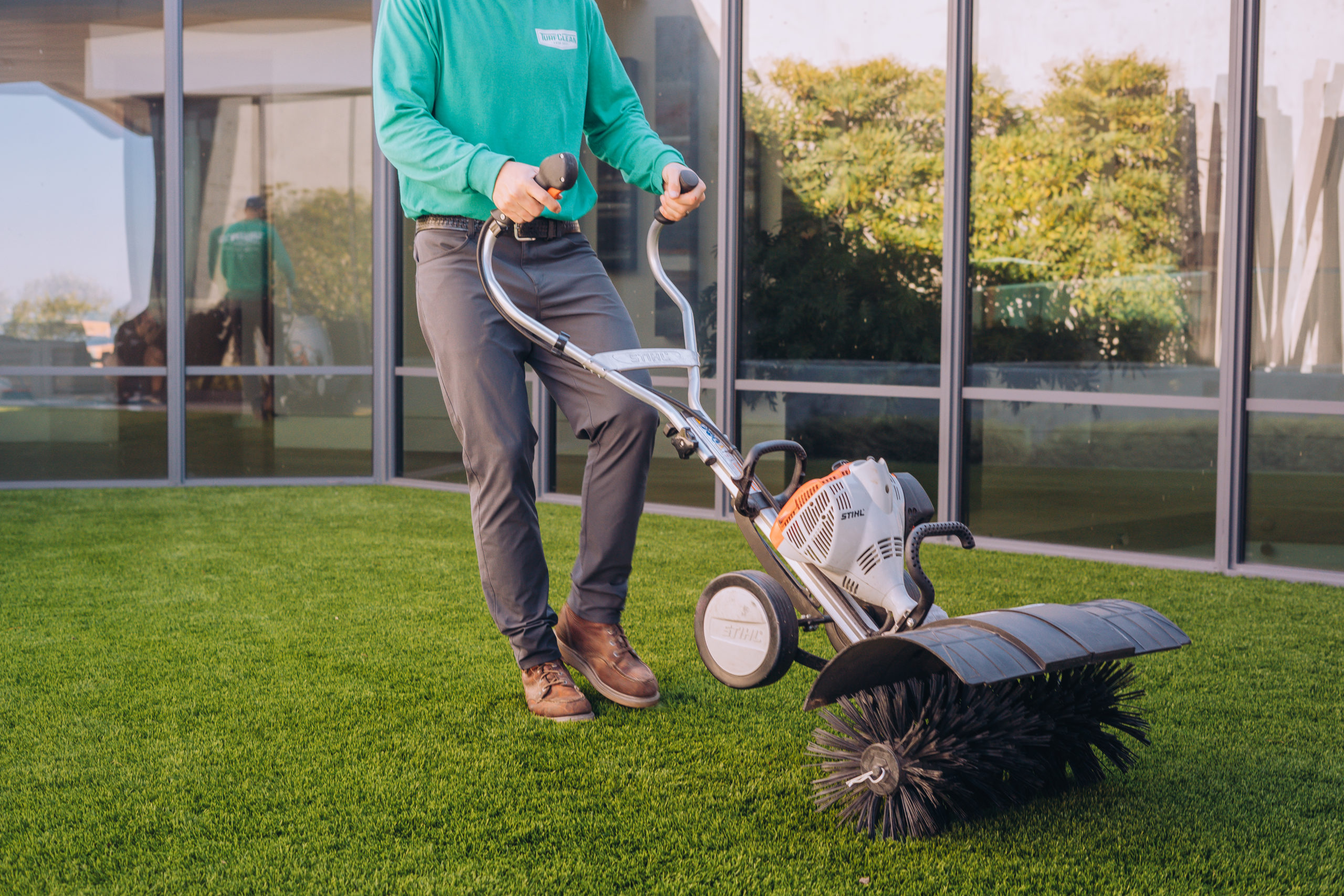
Professional artificial turf removal across Denton County. Complete system removal — turf, infill, and base materials — with proper site preparation for whatever comes next.
Artificial turf doesn't last forever, and there are legitimate reasons beyond end-of-life replacement to want it removed. Property sales, renovation projects, changing landscaping plans, upgrading to a better-specified new installation, or simply deciding that a different use of the space serves you better — all of these are real scenarios that Denton County homeowners and commercial property owners navigate. When it's time to remove, the process is more involved than it looks from the surface, and doing it right matters for what comes after.
A full artificial turf system has multiple layers: the synthetic turf face material, the infill layer embedded in it, the underlying aggregate base or decomposed granite sub-base, and often a weed barrier between the base and the native soil. Each layer needs to be removed in the right sequence, with the right equipment, to avoid damaging the surrounding landscape, existing hardscape, or the soil structure below. Pulling turf and leaving partial layers of aggregate base and infill sand behind is not a completed removal — it's a problem transferred to the next phase of whatever project comes next.
The most common removal scenario we handle is replacement — removing an old or failing installation before putting in a new one. This is the correct approach even if portions of the old installation are still structurally sound. New installation quality depends heavily on base condition, and the only way to properly assess and correct the base is to remove the old system first. The new installation starts on a prepared, inspected foundation rather than on whatever remains of the old one.
Renovation projects that reconfigure outdoor space are a frequent driver of removal requests in Denton's older established neighborhoods — the bungalow and craftsman areas near the Courthouse-on-the-Square, the mid-century homes in the North Lakes Park vicinity, and the maturing subdivisions along Teasley Lane and Mayhill Road. A homeowner adding a pool, expanding a patio, building a garage conversion, or reconfiguring a backyard layout may need turf removed from areas that will be part of the new construction, and may be extending turf to new areas simultaneously. We handle both sides of those transitions.
Property sales occasionally drive removal requests. A buyer who toured the property may have different landscaping preferences than the seller, or an estate situation may require clearing artificial turf from a property being prepared for market. Professional removal produces a clean, graded site that presents better than a partially removed or abandoned turf installation.
Some homeowners who installed turf years ago under a previous generation of less advanced products decide they want to upgrade. Older artificial turf — products from a decade or more ago — differs significantly from current-generation installations in fiber quality, drainage performance, and UV stability. Removing a dated installation and replacing it with a current system is a meaningful quality upgrade, not just cosmetic.
Professional removal begins with an on-site assessment of the existing installation: what products were used, how the base was constructed, what the perimeter anchoring method is, and what's adjacent to the installation that needs to be protected during the removal process — existing concrete, pavers, landscape plantings, fencing. This shapes the removal approach, the equipment used, and the debris handling plan.
The turf face material is pulled and rolled in manageable sections. For smaller residential areas, this is primarily manual work. For larger installations — commercial footprints, large backyard conversions, HOA common area turf — we use mechanical assistance to manage the volume efficiently. Infill is the next layer: the sand, silica, rubber, or antimicrobial infill material embedded in the turf backing. Depending on the infill type and its condition, some infill material may be salvageable for reuse in a new installation, though pet-use area infill with significant organic contamination is typically not appropriate for reuse and is disposed of separately.
Base material removal follows. The aggregate base layer — typically 3 to 4 inches of compacted crushed granite or similar material — is excavated and hauled. This step is where proper equipment matters significantly. The Denton County clay sub-grade beneath the aggregate is what you're working toward — the native soil that will be the starting point for whatever comes next. Aggregate removal without disturbing that underlying clay layer more than necessary is a precision step that affects how the site behaves after removal.
What the site looks like after removal depends on what's planned next. For homeowners replacing with a new artificial turf installation, we leave the sub-grade cleaned, assessed for drainage condition, and ready for new base preparation. Any drainage issues identified during removal — areas where the sub-grade is problematic, root intrusion that needs addressing, low spots that need re-grading — are documented and incorporated into the new installation plan.
For homeowners returning to natural grass — less common but a real choice for some — we prepare the soil for sod or seed establishment. This involves ensuring adequate soil depth is available after base material removal, addressing compaction from years under the aggregate base, and grading for appropriate drainage slope. Denton County clay presents specific challenges for natural grass establishment after turf removal: the sub-grade may be more compacted than native soil in an undisturbed area, and the drainage profile needs attention before grass will establish well.
For renovation projects where the cleared area is going into hardscape, pool construction, new structures, or other non-turf applications, we coordinate the level of site preparation appropriate for the incoming contractor or project phase. The goal is to hand off a clean, properly cleared site that doesn't create complications for whatever comes next.
Artificial turf materials require thought about disposal. The synthetic polymers in turf face material are not compostable and not standard recyclable material — they go to landfill unless a specialized recycling facility accepts them. Some manufacturers have take-back or recycling programs for their own products; we check on availability during the project planning phase. Aggregate base material that's clean and uncontaminated can sometimes be repurposed on-site or delivered to a facility that accepts construction fill. Pet-area infill with organic contamination is handled as a separate waste stream.
We're transparent about disposal costs and options during the project estimate. Material handling and disposal is a real cost component of removal that some contractors obscure in vague pricing — we break it out clearly so you understand what you're paying for.
When removal is followed by new installation — the most common scenario — we manage the full project from removal through new installation completion. The removal phase informs the new installation spec: base condition assessment during removal shapes what base preparation is needed, drainage issues identified during removal are addressed in the new base design, and perimeter conditions that contributed to edge failure in the old system are corrected in the new anchoring approach. This integrated management produces better new installation quality than separate removal and installation contractors working from handoffs.
Contact Artificial Turf of Denton to schedule an on-site removal assessment. We'll evaluate the installation, discuss what comes next for the site, and provide a clear estimate for complete removal and site preparation. We serve Denton proper, Corinth, Argyle, Sanger, Krum, Flower Mound, Lewisville, Highland Village, Lake Dallas, Hickory Creek, and the full Denton County area.
No — and we recommend against it even when it seems physically possible. Proper new installation quality depends on base assessment and correction. The only way to do that is to remove the old system first. Installing over existing turf also adds depth that can create drainage and edge problems.
Turf face material goes to landfill unless a manufacturer take-back or specialized recycling option is available — we check during project planning. Clean aggregate base can sometimes be repurposed or delivered to a fill-accepting facility. Pet-area infill with organic contamination is handled as a separate waste stream. We break all of this out in the estimate.
Residential removal typically takes one to two days depending on area size and base construction. Larger commercial footprints run longer. We provide a specific timeline during the assessment.
Yes. We address sub-grade compaction, drainage grading, and soil condition for sod or seed establishment after removal. Denton County clay presents specific conditions after years under an aggregate base that we account for in the natural grass site preparation.
Yes. For projects where the cleared turf area is part of a larger renovation — pool construction, patio expansion, garage conversion — we coordinate the removal scope and site preparation with your project timeline and the requirements of the incoming contractor.
Get started with artificial turf removal. Contact our Denton team for a free consultation.